How to Open a Card Shop: Business Plan & Store Layout
Plan how to open a card shop: define the customer, product mix, startup costs, store layout, fixture scope and opening checklist before committing to fit-out.
- Published
- 2026-11-03
- Editorial check
- 2026-11-03
- Reading time
- 5 minutes
Editorial buyer guidance. Read our authorship and sourcing policy.
To open a card shop, establish the customer and product mix, test the business assumptions, confirm premises and local requirements, and then plan retail, storage, trade-in and play zones. Keep the inventory budget separate from the fixture and construction budget so quotes remain comparable.
Plan with a Specific Cabinet Format.
Compare 24 reference configurations using metric and converted inch dimensions. Each format is a starting point for quotation; final dimensions, materials and performance follow the approved project drawings and samples.
Trading Card Display Counter
1200 × 550 × 950 mm47.2 × 21.7 × 37.4 in- Suggested custom range (mm)
- L900–1500 / D500–600 / H900–1000
- Structure
- 18mm MDF with HPL or painted finish; recessed plinth
- Glass / panel
- 8mm tempered top; 6mm sides, subject to structural review
- Interior & access
- 1–2 adjustable glass shelves; optional inclined trays. Lockable rear sliding doors and lower storage.
- Lighting
- Dimmable 4000K LED in concealed aluminum channels
- Before approval
- Confirm holder fit, access and usable display height
Card Display Checkout Counter
1800 × 650 × 1000 mm70.9 × 25.6 × 39.4 in- Suggested custom range (mm)
- L1500–2400 / D600–750 / H950–1100
- Structure
- 18mm plywood with HPL and reinforced worktop
- Glass / panel
- Display portion: 8mm top and 6mm tempered sides
- Interior & access
- Separate display and POS zones. Cash drawer, locked storage and cable outlets.
- Lighting
- Display LED with centralized service access
- Before approval
- Confirm POS envelope and any lower service section
Reference configurations for project discussion; final values require written approval. All 24 proposed formats · Materials, holder fit and specification notes
Complete Store Program: what to specify.
For how to open a card shop: business plan & store layout, use the following requirements from the linked fixture system to make the next supplier discussion concrete. These are planning inputs, not tested performance ratings.
- Site inputs
- Provide a measured floor plan, entrances, columns, services and target opening date.
- Assortment
- State the mix of graded cards, singles, sealed product and accessories.
- Store operation
- Define staff numbers, trade-in workflow, queueing and event seating.
- Delivery scope
- Confirm destination, installation team, shipping scope and drawing approvals.
Three decisions to carry into your project.
- 01
Define the shop before choosing furniture
- 02
Build a startup and operating-cost checklist
- 03
Check premises and local responsibilities
Define the shop before choosing furniture
Decide whether the store focuses on Pokemon and other TCG products, sports cards, collectibles or a mixed range. List the proposed sales channels and services, including singles, sealed products, accessories, trade-ins and events. A card shop business plan should state what customers buy and how staff serve them before assigning floor area.
Build a startup and operating-cost checklist
Separate one-time opening costs from recurring operating expenses. Gather actual quotations for premises, fit-out, fixtures, equipment, inventory and professional services. Keep contingency and opening working capital visible. The SBA business-planning resources provide a general framework; they are not evidence for a universal card shop startup cost.
Check premises and local responsibilities
Use a measured plan showing entrances, service points, storage and fixed obstructions. Confirm the permitted use and relevant requirements with the responsible local professionals before signing off construction or custom fixtures. Record who handles installation, electrical work and final checks; a fixture supplier quotation should not silently absorb those responsibilities.
Connect browsing, sales, trade-ins and play
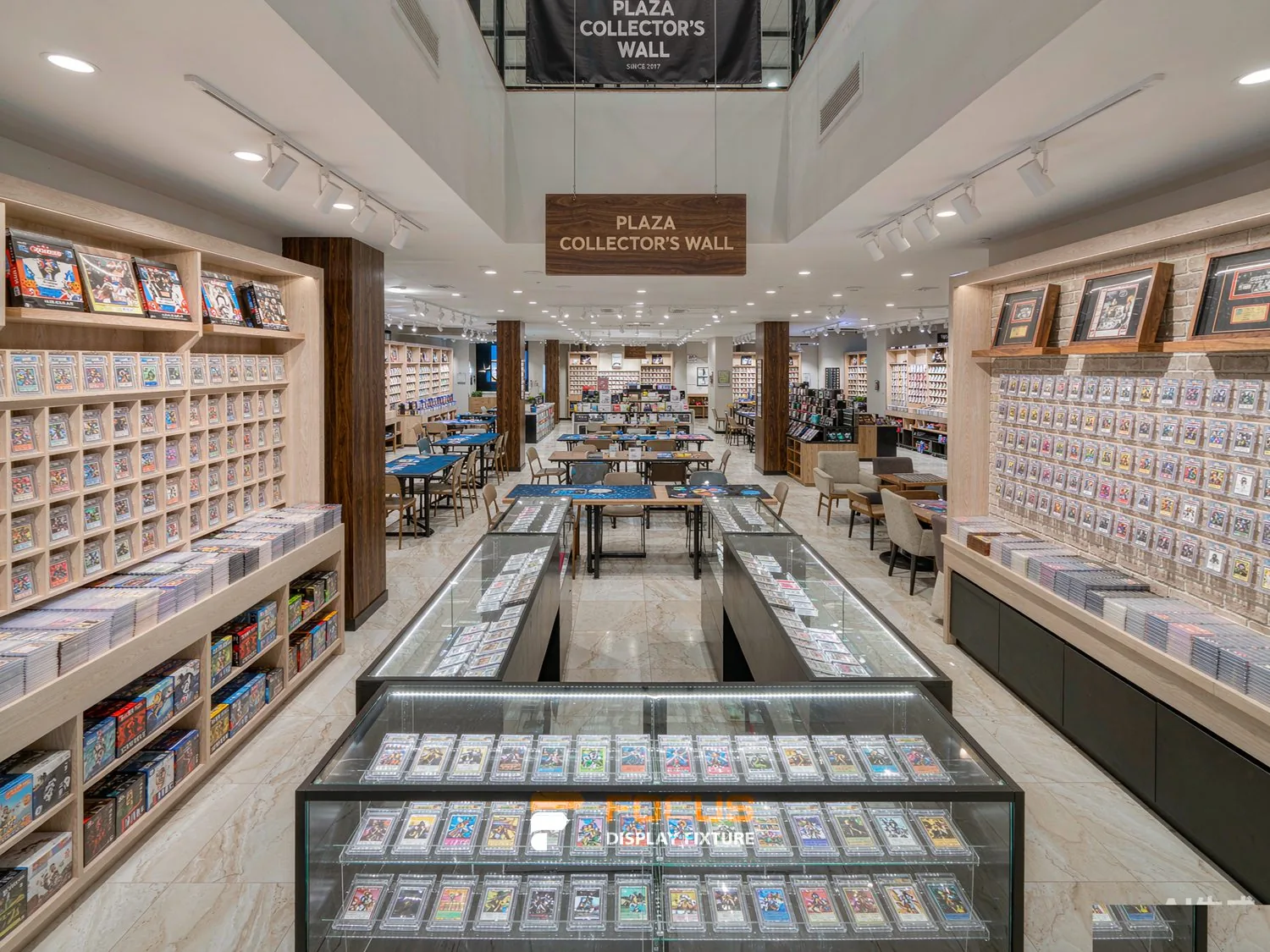
Map the main customer and staff routes. Place protected-card viewing where staff can retrieve items, and separate incoming trade-ins from priced inventory. If organized play is part of the plan, include occupied chairs, bags and event queues on the layout. Review the current requirements of the relevant play program directly rather than assuming a furniture order establishes eligibility.
Approve a fixture schedule and opening checklist
List each wall bay, counter, cabinet and accessory shelf with quantity, dimensions and intended merchandise. Review samples and drawings before production. Plan receiving, assembly, cleaning, stocking, labels and staff training, with an owner and a date for each step. Rehearse a normal transaction and a trade-in before the opening day.
Translate the guidance into a specification check.
These parameters connect the article to a real product and give procurement, design and engineering teams one reviewable basis.
Compare one controlled basis.
How we apply this decision.
Use a representative merchandise sample and a measured plan. Record the approved arrangement before ordering custom fixtures.
Review FOCUS capabilities →What still needs project confirmation.
Editorial planning guidance. Images illustrate supplied design references; dimensions, performance, commercial outcomes and local compliance are confirmed separately for each project.
Prepare the required inputs →Avoid these shortcuts.
- Treating a reference image as an approved production specification.
- Comparing suppliers without identical dimensions, quantities and delivery scope.
- Separating material, lighting or hardware decisions from the drawing revision.
- Leaving packing, local installation and site interfaces undefined.
Before the next approval.
- Define the shop before choosing furniture
- Build a startup and operating-cost checklist
- Check premises and local responsibilities
- Record each open point, owner, due date and required evidence.
Answers to the next practical questions.
01How to Open a Card Shop — where should I start?+
To open a card shop, establish the customer and product mix, test the business assumptions, confirm premises and local requirements, and then plan retail, storage, trade-in and play zones. Keep the inventory budget separate from the fixture and construction budget so quotes remain comparable.
02What should the approval record include?+
Use a representative merchandise sample and a measured plan. Record the approved arrangement before ordering custom fixtures.
Trace the supporting information.
SBA: planning a business ↗Business planning and break-even framework; not card-industry profitability data.
Wizards Play Network: store application guidance ↗Primary reference for stores planning organized play. Program participation and site approval are separate from fixture supply.
Content review policyGuidance published 2026-11-03. Editorial check: 2026-11-03. Project engineering approval and physical testing are separate.
Move from research to a project decision.
Keep building the specification.
Get a project-specific recommendation.
Send your store plan, product sizes, fixture quantities, destination and opening target. FOCUS will identify the product fit, engineering inputs and quotation basis.
Start Your Display Project